Using design to solve the silent risk in Clinical Handover
PROBLEM
The information is written down all shift, then written again at the end of the shift.
SOLUTION
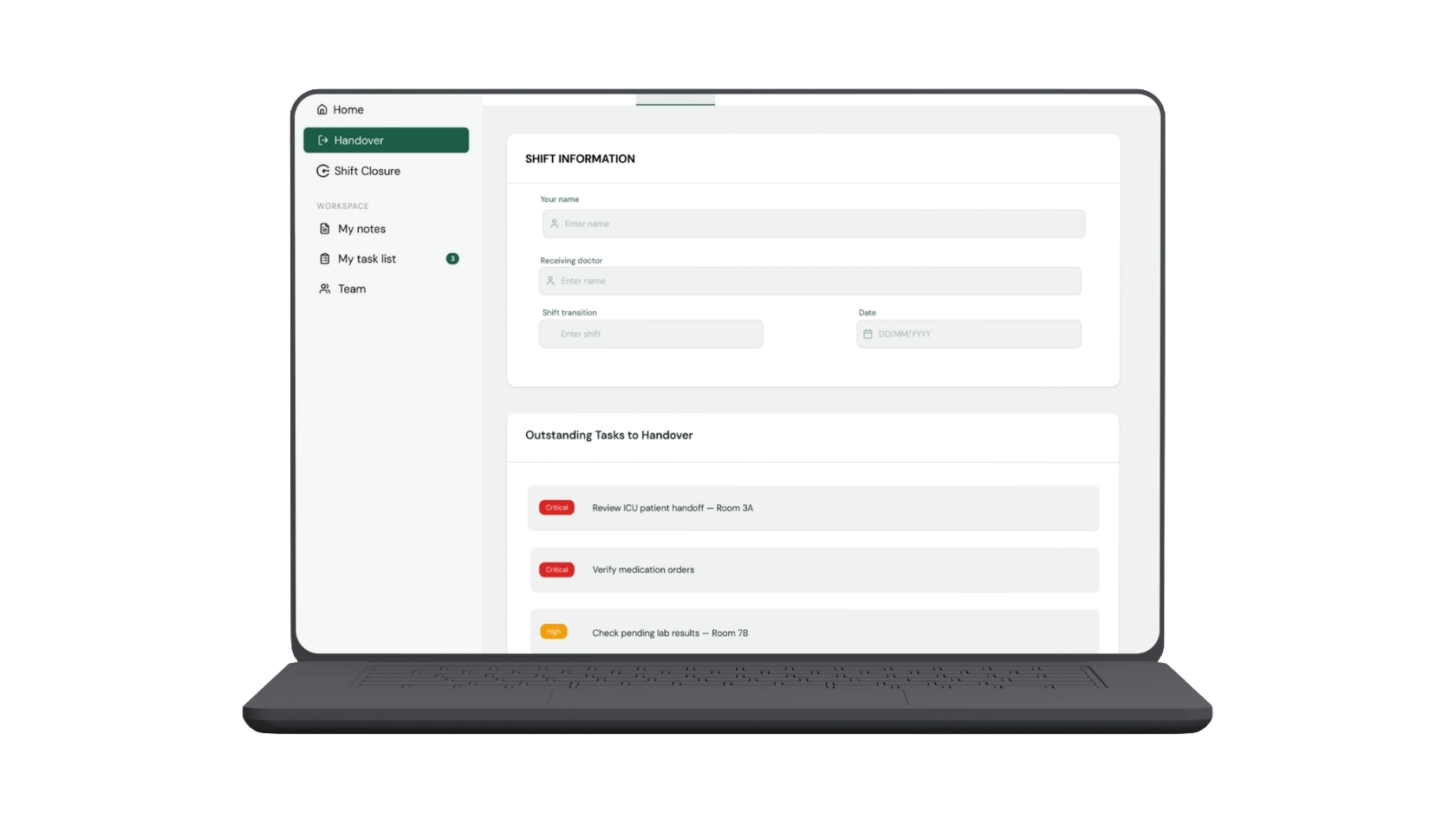
Clera drafts the handover from existing notes, and the doctor edits rather than writes.
COMPANY: Clera
CATEGORY: Healthcare UX, AI Product Design, Clinical Workflow
MY ROLE: UX Researcher and Product Designer
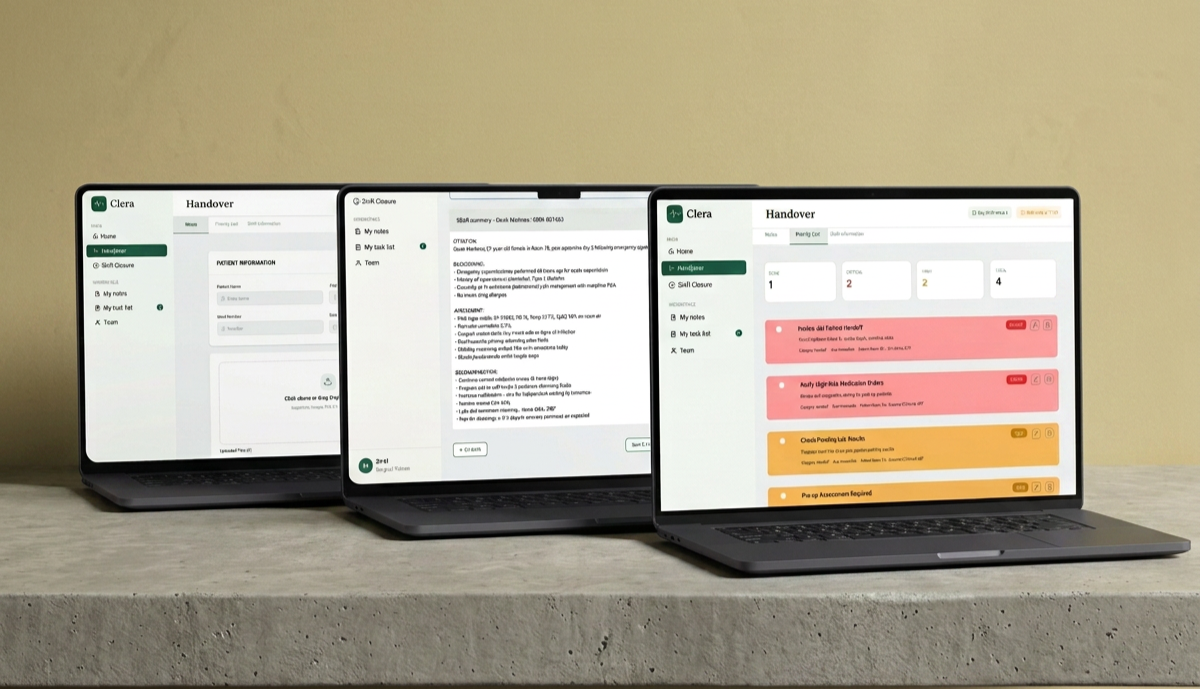
Designing AI-Powered Clinical Handover for High-Stakes Healthcare Workflows
Context
Handover in Ireland runs on paper, Word docs, and partial EHRs — the only EU country without universal digital health records.
Challenge
Doctors lose time re-synthesising the same information across fragmented paper systems, and safety depends on what survives the retelling.
Solution
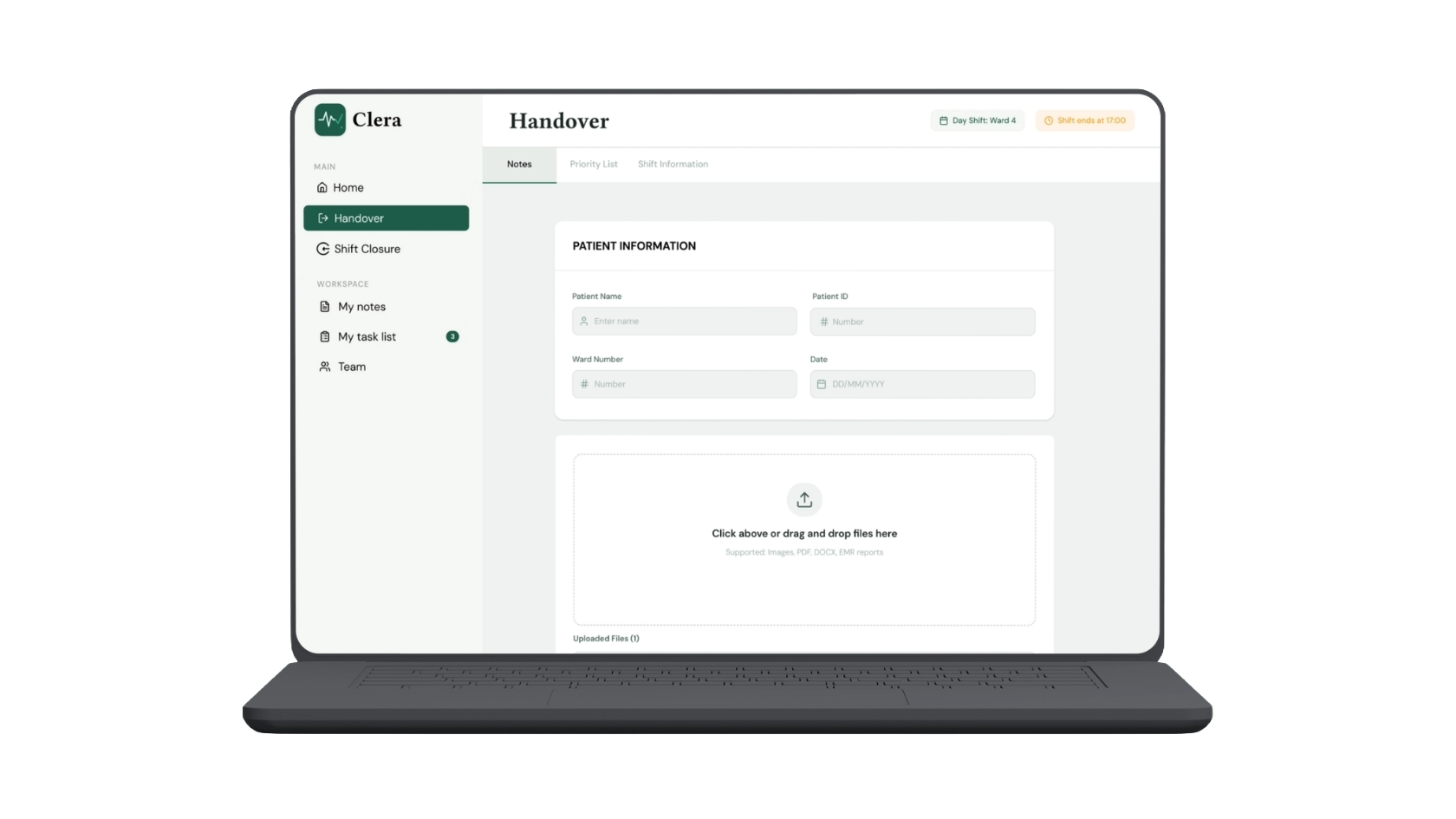
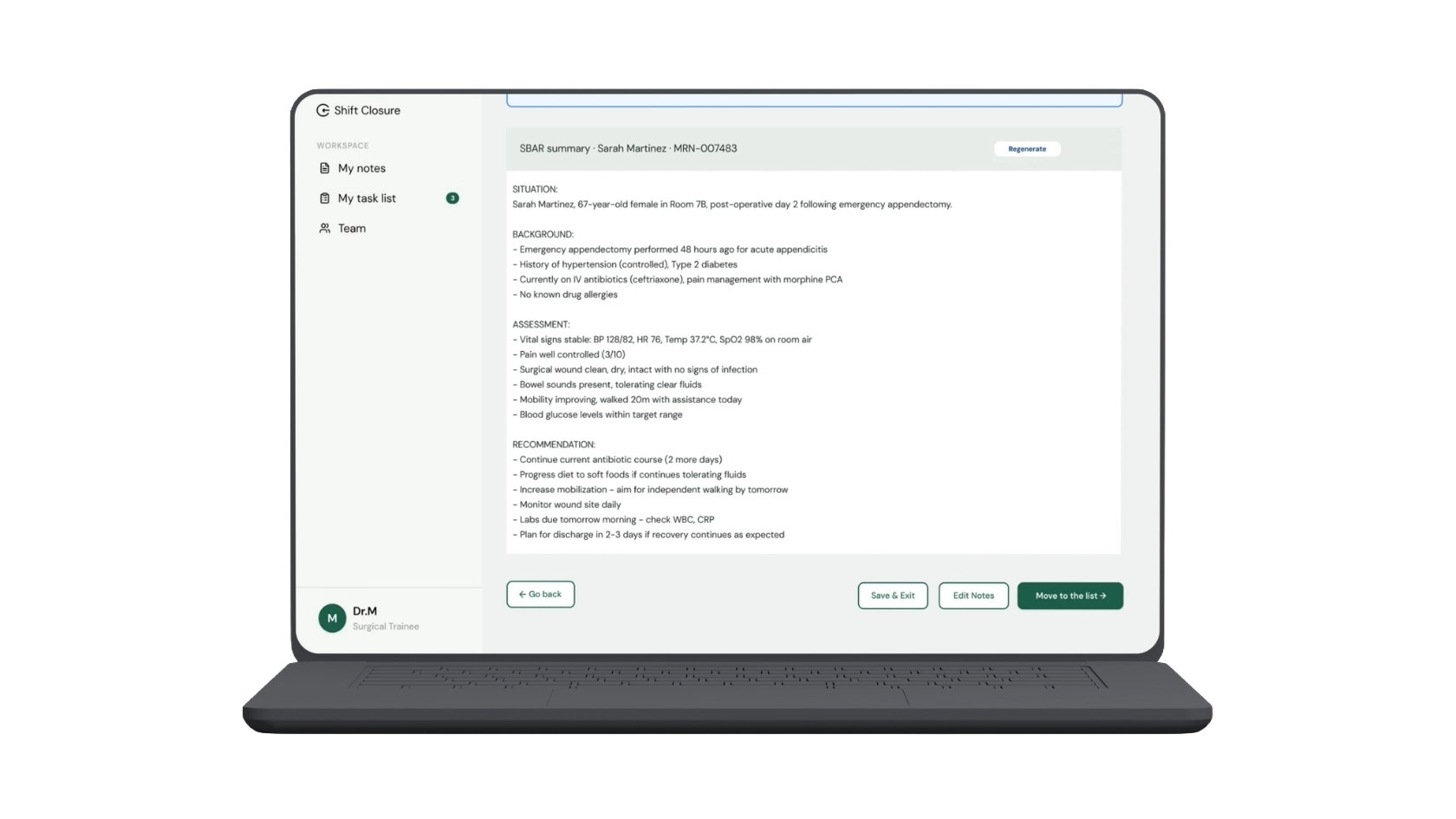
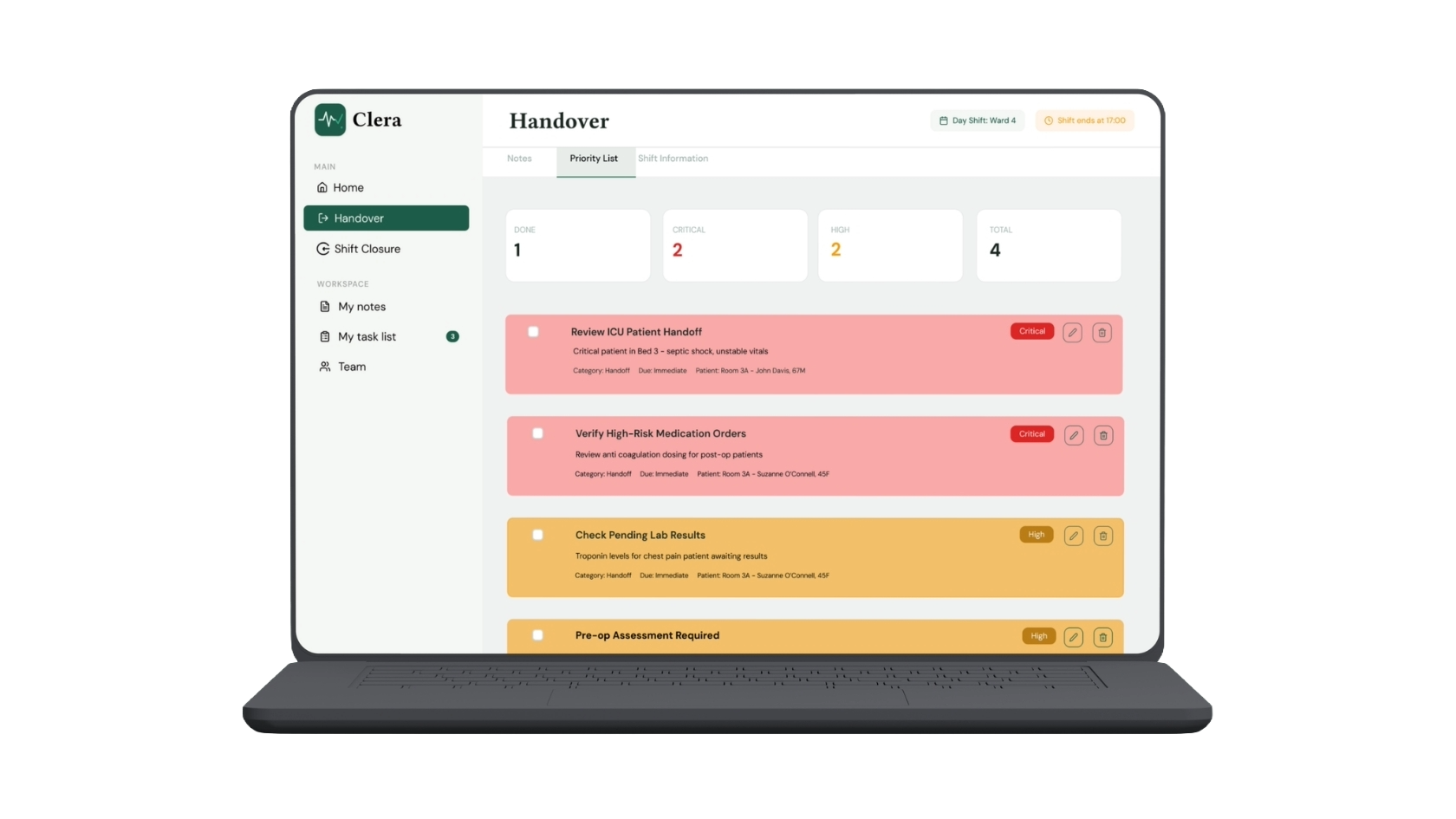
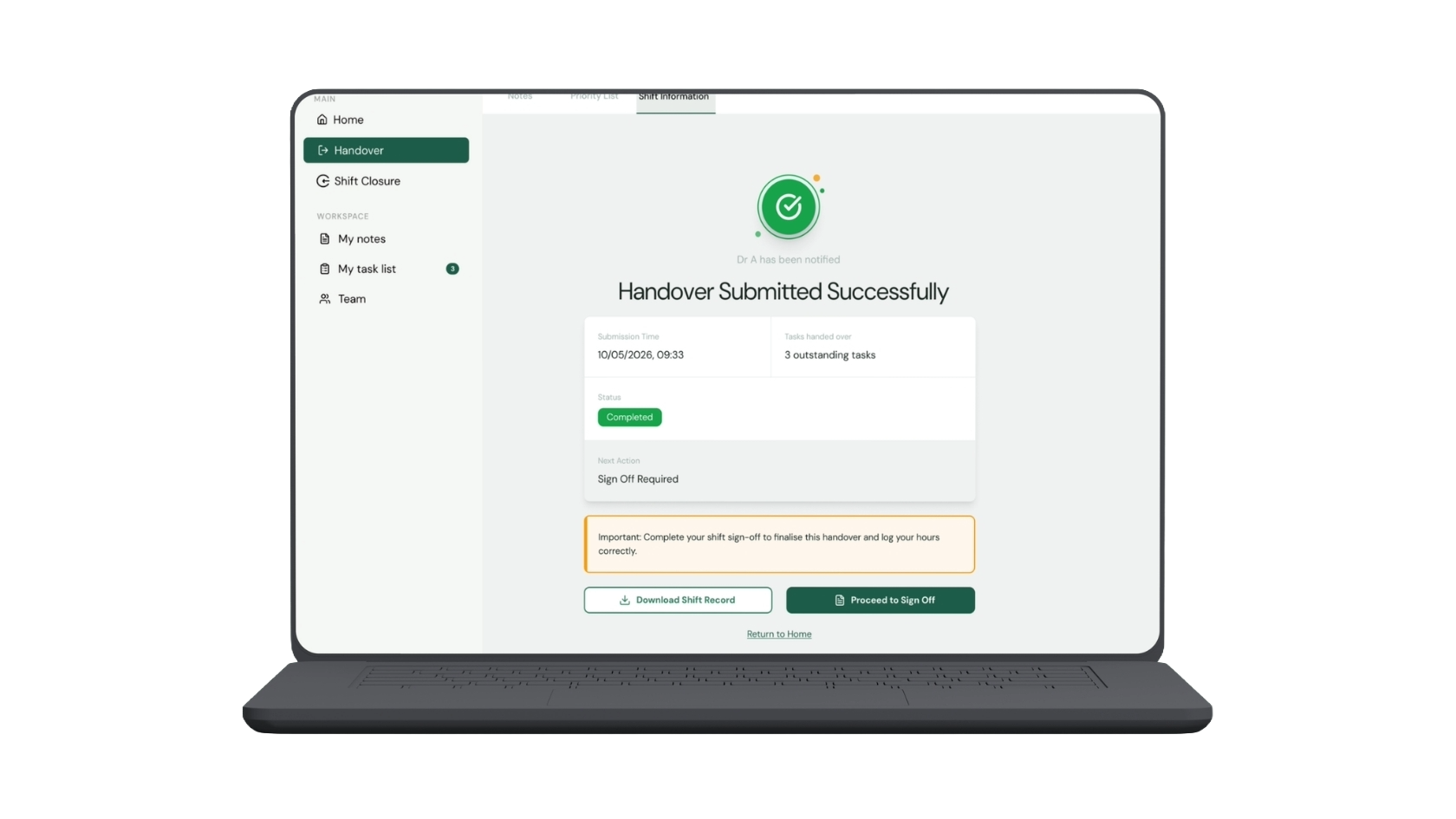
Clera drafts the handover from notes that already exist and makes the doctor the editor rather than the author, then closes the shift with a checklist.
Goals
Cut documentation time without outsourcing clinical judgement, on wards that still run on paper.
PROBLEM
Why do we need a Smoother Handover of Clinical Notes?
Administrative load is a documented crisis, not a hunch. National Clinical Guideline No. 11 explicitly flags handover as a high patient-safety risk , so time and safety are not competing goals here. They are part of the same problem. Before speaking to anyone, I established that the problem was real, measured, and unsolved, so that research could go straight to the mechanism rather than re-proving the obvious.
How did we arrive from broad clinical documentation to designing a focused handover process?
Research
Surveys, user interviews and competitive analysis.
Define
Defining the problem and identifying target personas.
The design process progressed through research, problem definition, design, and testing. User interviews and competitive analysis helped narrow the product from a broad clinical documentation idea into a focused and safe handover process.
Design
Wireframing and high-fidelity mockups.
Test
Testing and iteration planning.
How the Design Addresses the Problem…..
DESIGN
Clera is exploring the development of a tool that gives doctors their time back without compromising the safety of the handover itself. The Solution combines an AI assistant with an intentional decision-making process so that the final clinical decision-making remains with the Doctors
Generating the SBAR summary from existing notes, EHR exports, or OCR-scanned paper
Building a verification step into the flow, so nothing sends without clinician review
Structuring closure as a checklist rather than free recall
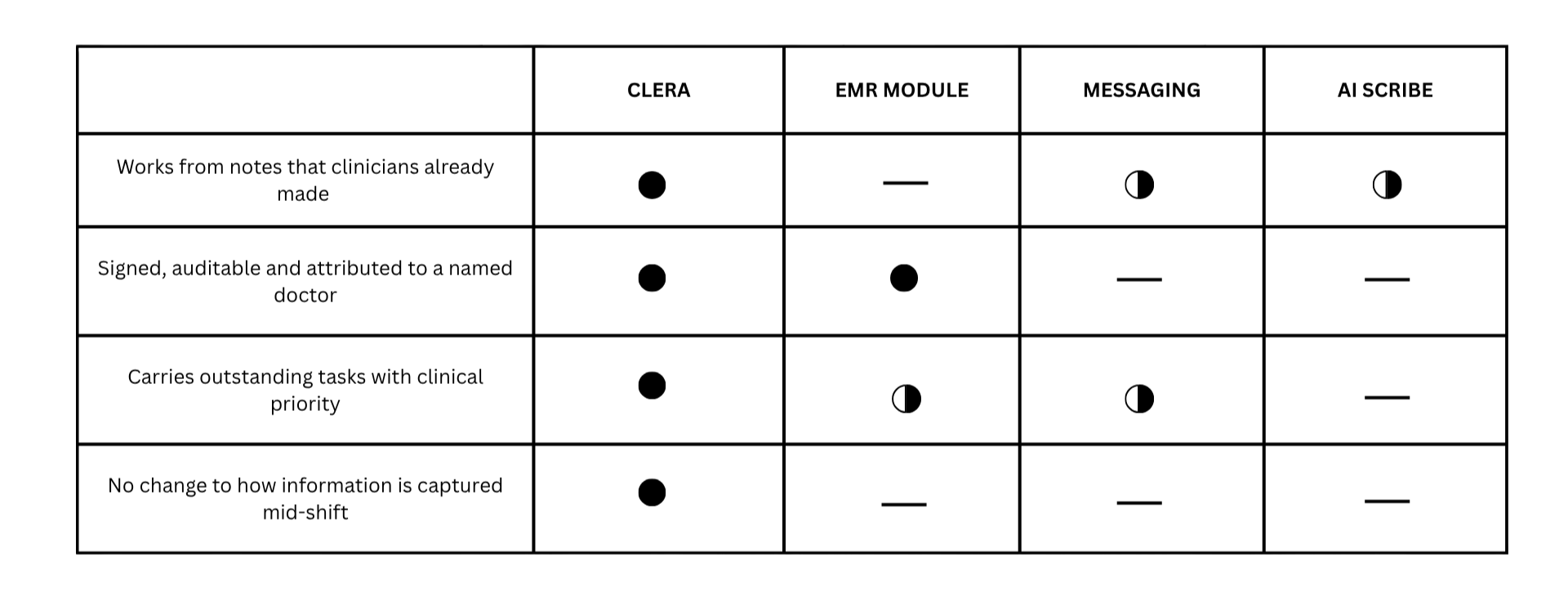
Every tool in this space already does one half of the job well, which is exactly why doctors still finish their shift writing the other half by hand.
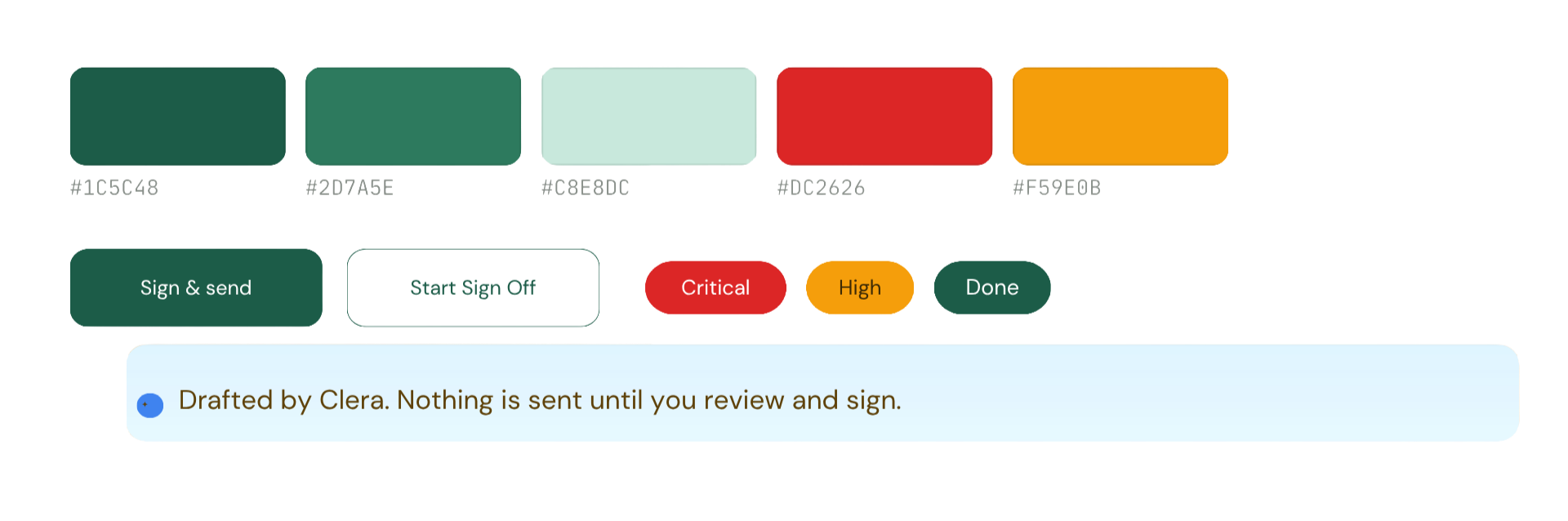
The flow shipped as a clickable build on a deliberately small system
Open the Clickable Prototype
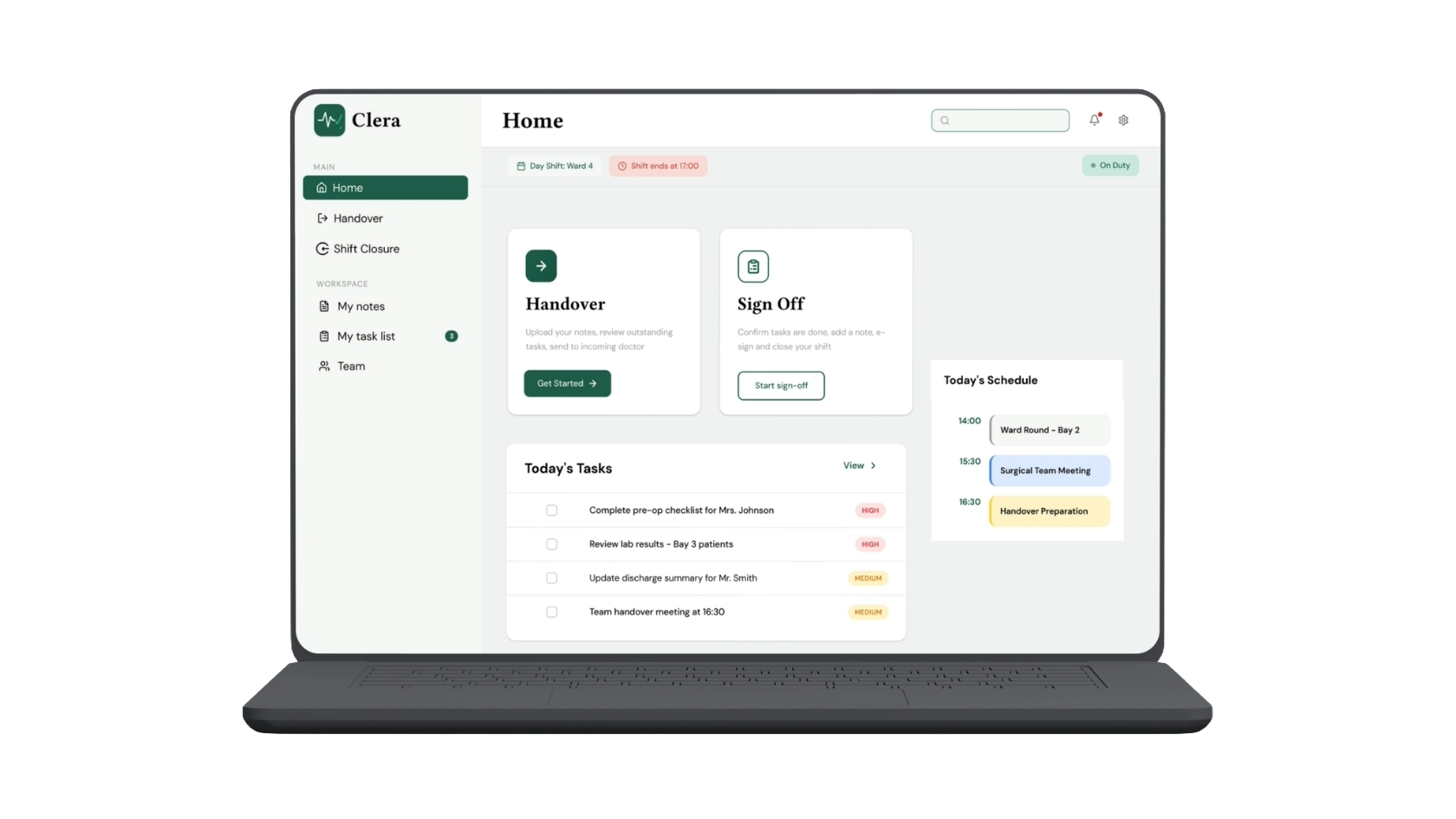
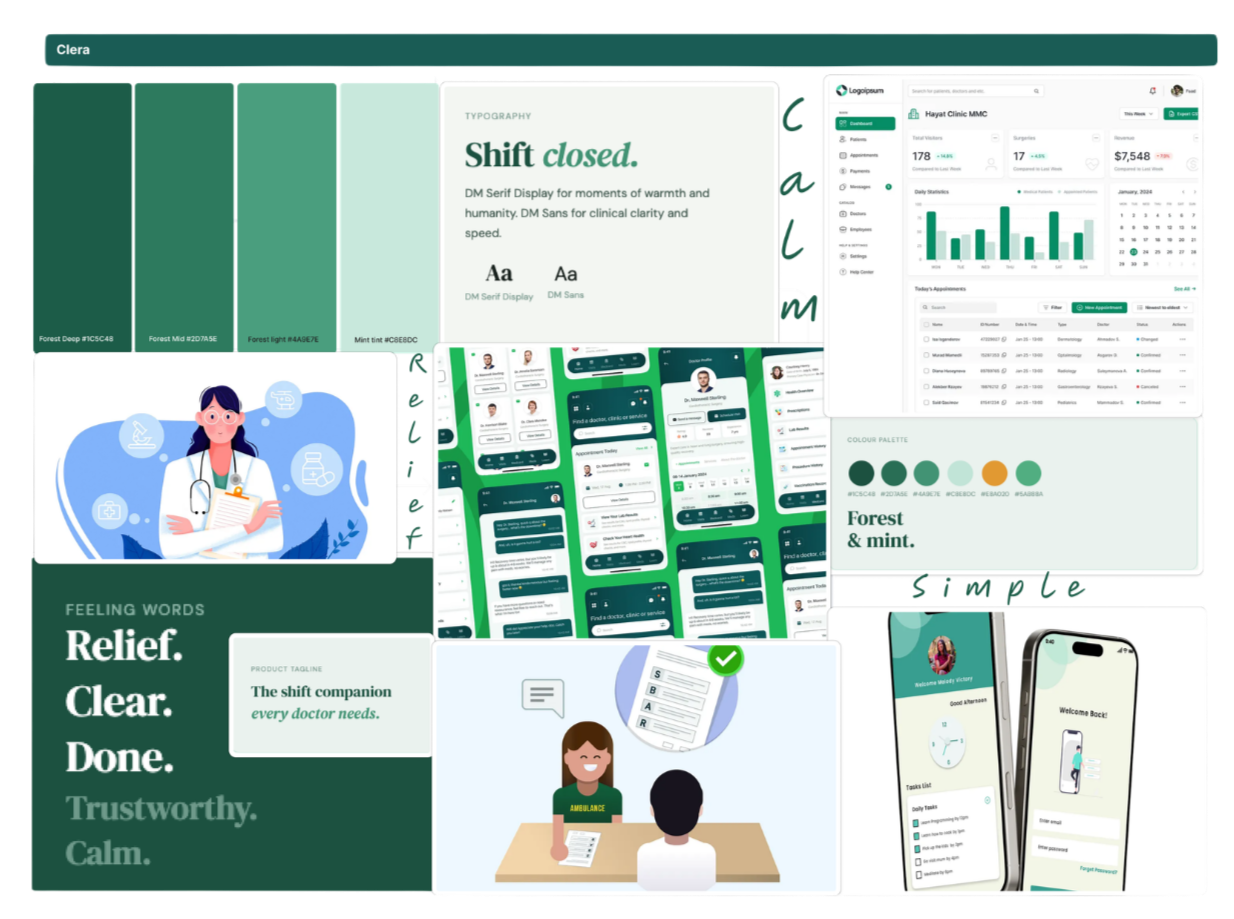
The Design System
What I'd do differently
Put a fake AI draft in front of clinicians in week one. A Wizard-of-Oz summary on paper would have surfaced the “draft, don't decide” boundary before five concepts were drawn.
REFLECTIONS